On January 3, 2026, the United States launched a military operation — codenamed Operation Absolute Resolve — that captured Venezuelan President Nicolás Maduro and his wife, Cilia Flores, from a compound in Caracas and transported them to New York City to face narcoterrorism charges. The operation involved Delta Force operators, bombing of air defense infrastructure across northern Venezuela, and resulted in at least 40 casualties.
Within 48 hours, two competing narratives emerged from within the Trump administration itself. President Trump told reporters that the United States would “run” Venezuela until a suitable leader was found, repeating the claim multiple times. Secretary of State Marco Rubio went on CBS’s Face the Nation the following day to reframe the approach: the United States would not govern Venezuela day-to-day, but would enforce what he called an “oil quarantine” to exert leverage over the country’s political future.
This article documents what the operation involved, what the oil quarantine means in practice, and why Venezuela’s petroleum reserves make this situation fundamentally different from previous U.S. interventions.
—
What Actually Happened
The military operation had been months in the making. According to reporting compiled from multiple sources, the CIA deployed a team into Venezuela that tracked Maduro’s movements using a source close to the president. Delta Force and other special operations units built a mockup of Maduro’s compound — described by Trump as a heavily guarded “fortress” — for rehearsal purposes.
The operation began around 2 a.m. local time on January 3 with explosions observed across northern Venezuela as U.S. forces suppressed air defense systems. The apprehension force attacked Maduro’s compound in Caracas. Maduro and Flores were flown to New York City, where they appeared in Manhattan federal court on January 5 and pleaded not guilty to narcoterrorism conspiracy charges that had been originally filed in 2020 during Trump’s first term.
Venezuela’s Supreme Court appointed Vice President Delcy Rodríguez as acting president for 90 days. Defense Minister Vladimir Padrino López endorsed the ruling. The rest of Venezuela’s governing apparatus — ministers, military command, intelligence services — remained in their posts.
The administration justified the operation as law enforcement, not military action, citing the existing indictments against Maduro. Rubio argued that congressional notification would have endangered the mission. Democrats in Congress disputed this characterization. House Minority Leader Hakeem Jeffries called it “an act of war” and pushed for legislative action to prevent further military operations without explicit congressional approval.
—
The Oil Quarantine Explained
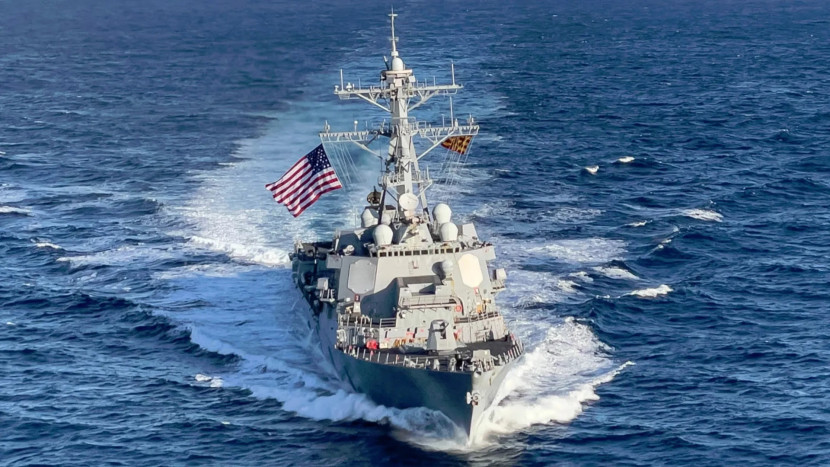
The phrase “oil quarantine” refers to an economic pressure strategy that was already partially in place before Maduro’s capture. Since September 2025, the United States Southern Command had been conducting strikes on vessels in the Caribbean that the administration alleged were trafficking drugs on behalf of Venezuela. In December 2025, a maritime blockade began targeting sanctioned oil tankers and shadow fleet vessels.
Rubio described the mechanism in straightforward terms: “There’s a quarantine right now in which sanctioned oil shipments — there’s a boat, and that boat is under U.S. sanctions, we go get a court order — we will seize it.”
In the days following Maduro’s capture, American forces seized at least two tankers carrying Venezuelan crude, including a Russian-flagged vessel intercepted in the North Atlantic and a stateless “dark fleet” tanker apprehended in the Caribbean. U.S. Energy Secretary Chris Wright stated that Washington would control sales of Venezuelan oil “indefinitely,” with the U.S. marketing crude from both stockpiled reserves and ongoing production.
Rubio told the Senate that the plan involved seizing between 30 and 50 million barrels of oil — roughly two months of Venezuela’s typical production — and selling it on the open market at prevailing prices. At current prices, that stockpile would be worth an estimated $1.8 to $3 billion. The proceeds would be controlled by the United States, not Venezuelan authorities, with Rubio promising the money would benefit ordinary Venezuelans rather than funding corruption.
—
Why Venezuela’s Oil Matters
Venezuela holds the world’s largest proven crude oil reserves, estimated at approximately 303 billion barrels — roughly 17% of the global total, according to the U.S. Energy Information Administration. Oil has historically accounted for more than 80% of the country’s export revenue.
However, Venezuela’s oil industry has been in severe decline for years. Production collapsed under Maduro’s government from roughly 2.3 million barrels per day in 2015 to under 800,000 barrels per day by late 2025, driven by mismanagement, corruption, underinvestment, and successive rounds of U.S. sanctions imposed during both the first Trump and Biden administrations.
The infrastructure itself is deteriorating. Roxanna Vigil of the Council on Foreign Relations told CBC that “the oil sector is going to take years, if not a decade or more, to come back” and would require tens of billions of dollars in investment. Refineries are operating well below capacity. Pipelines need repair. Workforce expertise has left the country along with millions of Venezuelan emigrants.
Trump stated that U.S. oil companies would fix Venezuela’s “broken infrastructure” and start generating revenue. But experts noted that attracting private investment would require clarity on legal ownership, sanctions relief, and political stability — none of which existed in early 2026.
—
The Competing Narratives from Washington
The most striking feature of the administration’s messaging was its internal contradiction.
Trump, speaking to reporters in Florida on January 3, was explicit: “We’re gonna be running it with a group, and we’re gonna make sure it’s run properly.” He referenced “people standing right behind me” — Rubio and Defense Secretary Pete Hegseth — as those who would manage the situation. On Sunday night, he reiterated: “We’re in charge.”
Rubio’s correction the next day was notably more restrained. On CBS’s Face the Nation, he said the United States was not interested in “micromanaging day-to-day” governance. Instead, Washington would control “the direction this is going to move going forward” through economic leverage — specifically the oil quarantine.
Whether this represented a genuine policy disagreement or a calculated “good cop, bad cop” dynamic remains debated. War on the Rocks analysis characterized the post-Maduro approach as “regime management” — not democracy-building, but leveraging compliant insiders within the existing security apparatus to reshape Venezuelan governance in ways that serve U.S. interests.
The administration’s stated demands were transactional: expel foreign security and intelligence personnel tied to Cuba, Russia, Iran, and China; dismantle drug trafficking networks; and open the oil sector on terms favorable to U.S. companies and buyers.
—
International and Domestic Reactions
The operation drew sharp international criticism. The U.N. Secretary-General stated that the military incursion violated the U.N. Charter and set a dangerous precedent for international relations. Al Jazeera documented that the operation was condemned by the U.N. Security Council. Multiple Latin American countries expressed concern about sovereignty implications.
Acting President Delcy Rodríguez initially defied Washington, stating that “the government of Venezuela is in charge in our country, and no one else.” She called the operation “barbarity” and demanded Maduro’s release. However, within days she adopted a more conciliatory tone, inviting the Trump administration “to collaborate” on shared development — a shift that suggested either negotiation or pressure was taking effect.
Venezuelan opposition leader María Corina Machado, who received the 2025 Nobel Peace Prize, asserted that her movement had been “mandated” by the Venezuelan people to lead the country. Edmundo González Urrutia, recognized by the U.S. as the winner of the disputed 2024 presidential election, declared himself President of Venezuela, receiving backing from some foreign leaders including French President Emmanuel Macron.
Domestically, Republican senators largely supported the strategy. Senator Tom Cotton stated that the U.S. wanted Venezuela to “expel the Cubans and the Iranians and the Islamic radicals” and “return to the civilized world.” Democrats were far more critical. Senator Chris Murphy called the plan “insane,” characterizing it as “proposing to steal Venezuela’s oil at gunpoint forever and use that leverage to run the country.”
—
The Strategic Calculation
The operation represents the most assertive American action to achieve regime change since the 2003 invasion of Iraq — a comparison that makes many observers uncomfortable, including within Trump’s own political base, which historically opposes foreign nation-building.
NPR’s analysis noted the paradox: Trump’s political identity was built in opposition to neoconservative “endless wars,” yet his Venezuela policy involved military strikes, regime change, and open discussion of controlling another country’s primary economic resource. Vice President Vance attempted to reframe the narrative: “Are we just supposed to allow a communist to steal our stuff in our hemisphere and do nothing?”
The administration’s approach — framing the operation as law enforcement rather than war — served a specific political purpose. It allowed Republican officials to argue this was about arresting an indicted drug trafficker, not about invading a country. Whether that distinction holds up legally, diplomatically, or in the long-term strategic consequences for U.S. relations in Latin America is the question that will define the aftermath.
As of mid-February 2026, the situation remains fluid. Maduro and Flores are in U.S. custody awaiting trial. Rodríguez holds nominal power in Caracas but operates under severe U.S. pressure. The oil quarantine continues. And the fundamental question — who will actually control Venezuela and its 303 billion barrels of oil — has no clear answer.
—
Sources:
1. Wikipedia — 2026 United States Intervention in Venezuela (Ongoing) 2. CBS News — Trump Says U.S. Is “In Charge” of Venezuela; Maduro Jailed After Military Operation (January 2026) 3. TIME — What to Know About U.S. Plan to ‘Run’ Venezuela (January 2026) 4. TIME — Rubio Details Plan to Sell Venezuela’s Oil (January 2026) 5. NPR — 7 Takeaways from Trump’s Action in Venezuela (January 2026) 6. War on the Rocks — After Maduro: Trump’s Managed Authoritarianism Trap in Venezuela (January 2026) 7. CBC News — After Seizing Maduro, Trump Wants Venezuela’s Oil (January 2026)
Disclaimer: This article reports on an evolving geopolitical situation based on publicly available information. The legal, diplomatic, and strategic implications of the events described are subject to ongoing debate. The author presents multiple perspectives without endorsing any particular interpretation.