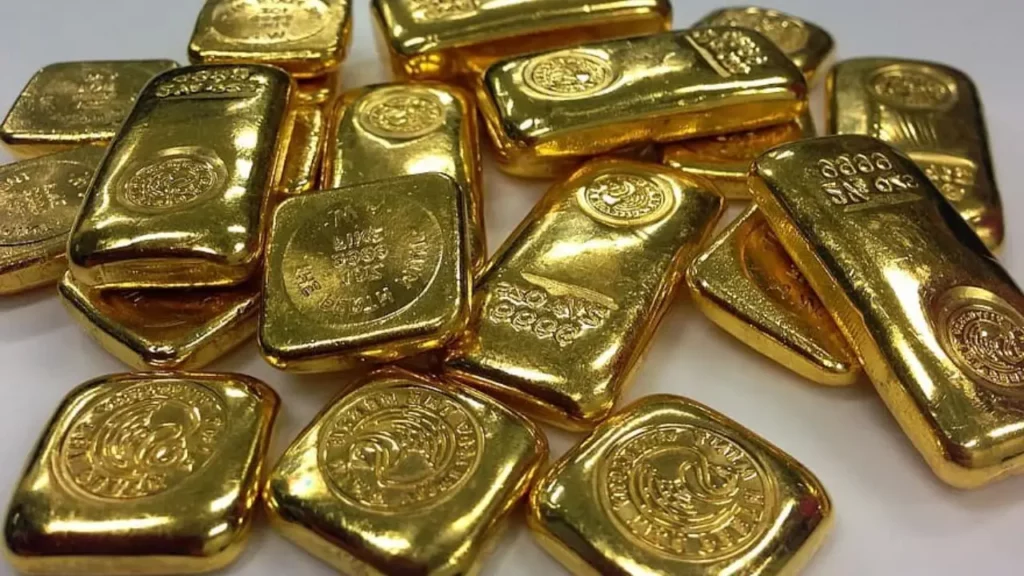
Gold crossed $5,500 per ounce for the first time in history on January 28, 2026, touching an intraday peak of $5,589.38. That number represents a 100 percent gain over the prior twelve months — a pace of appreciation that, for a major liquid commodity, has not been seen since the 1979 oil crisis era.
The question I keep hearing is some version of: “Did I miss it?” The honest answer requires understanding why gold moved the way it did, because the reasons matter more than the price level when thinking about whether and how to allocate.
What Actually Drove Gold to These Levels
The simple version: gold surged in 2025 because everything that gold is theoretically supposed to protect against — currency debasement, geopolitical instability, fiscal unsustainability, loss of confidence in monetary institutions — all got worse simultaneously.
The more precise version involves three distinct drivers that are worth separating.
Central bank buying at an unprecedented pace. Global central banks purchased 1,044.6 metric tons of gold in 2024, according to the World Gold Council. That trend accelerated through 2025, with central banks averaging approximately 60 tons per month — more than triple the 17-ton monthly average from before 2022. This is not random. Central banks, particularly in emerging markets, have been systematically reducing their USD reserve concentration since Russia’s foreign exchange reserves were frozen following the 2022 Ukraine invasion. The message that event sent to reserve managers globally — that dollar-denominated reserves could be rendered inaccessible — has had a lasting effect on how countries think about reserve diversification.
The breakdown of gold’s historical relationship with real interest rates. For decades, gold prices moved inversely with real yields: when real interest rates rose, gold fell, because holding a non-yielding asset became more expensive relative to yield-bearing alternatives. That relationship broke down in 2022–2023. Despite a sharp rise in real rates, gold climbed. This suggests that institutional demand — particularly central bank buying — has become large enough to override the traditional yield-driven mechanism. Morningstar analysts describe it as a structural repricing of monetary credibility and geopolitical risk, rather than a standard safe-haven spike.
ETF inflows and retail investment demand. After years of outflows, gold ETFs saw major inflows return in 2025. European-domiciled gold ETFs alone attracted over EUR 2 billion in the first weeks of 2026. Western institutional investors who had reduced gold allocations during the high-rate environment began rebuilding positions as the Fed cut rates three times in late 2025, bringing the target range to 3.5–3.75 percent.
The January 28 spike specifically was amplified by a geopolitical event — escalating US-Iran tensions on the same day the Fed held rates steady. But the underlying rally had been building for eighteen months before that date.
What the Major Banks Are Forecasting
The forecasts from major financial institutions are worth knowing, with the caveat that all price forecasts carry significant uncertainty:
Goldman Sachs revised its December 2026 target to $4,900/oz, up from $4,900 previously, citing structurally elevated central bank buying and sticky macro-policy hedges that it does not expect to unwind quickly.
J.P. Morgan projects gold averaging near $5,055/oz in Q4 2026, with a longer-term view that prices could approach $5,000–$6,000 range if central bank demand continues at current pace. Their 2026 estimate for central bank purchases is approximately 755 tons — lower than the 2022–2024 peak of 1,000+ tons annually, but still well above pre-2022 averages.
ING forecasts an average of $4,325/oz for 2026, noting that while the bull run has further to go, the pace of appreciation will likely slow from 2025’s exceptional 60+ percent gain.
Capital Economics takes a more cautious view, projecting gold could fall back toward $3,500 by end of 2026 as speculative excess unwinds. They remain the notable dissenting voice among major institutions.
Bank of America targets $5,000 for 2026, with the same caveat that the sharp 2025 gains increase the probability of near-term pullbacks.
The range of credible institutional forecasts spans roughly $3,500 to $5,400+ — which is an honest reflection of genuine uncertainty, not analytical failure. Anyone claiming precision in gold price forecasting is overselling what is knowable.
The Key Risk: What Could Break the Rally
Understanding the upside case without understanding the downside risks is incomplete analysis.
A major risk-off event forcing liquidity selling. Gold is highly liquid, which means it gets sold during severe market dislocations when investors need cash fast. This happened in March 2020 at the onset of COVID. During any sharp multi-asset selloff, gold tends to fall alongside everything else in the short term before recovering. Investors with leveraged positions or short time horizons can be forced out at the worst moments.
A resolution of geopolitical tensions. A meaningful de-escalation in US-China trade conflict, or a ceasefire and diplomatic progress in ongoing conflict zones, would reduce safe-haven demand. This is a lower-probability scenario given current trajectory, but not zero.
Central bank selling or slowdown. The entire structural case for elevated gold rests heavily on the assumption that central bank buying remains robust. If major buyers — China, India, emerging market central banks — reduce purchases or begin selling to meet domestic financial needs, the demand pillar weakens significantly.
A hawkish policy pivot. If inflation re-accelerates and the Fed reverses course on rate cuts, real yields would rise and the cost of holding non-yielding gold increases. Less likely given current Fed signaling, but the Powell succession in May 2026 introduces some policy uncertainty.
How to Think About Allocation at $5,000+ Gold
The most common question after a 100 percent run: “Is it too late?”
The more useful question is: what role do you want gold to play in your portfolio, and does that role justify allocation at current prices?
If the role is insurance against monetary and geopolitical tail risks: The case for some allocation does not depend heavily on whether gold is at $2,500 or $5,000. If you believe the structural drivers — central bank reserve diversification, fiscal sustainability concerns, geopolitical fragmentation — remain in place, then gold at $5,000 serves the same insurance function it served at $2,500. The cost of that insurance is higher now, but insurance is always more expensive after the risk has become more visible.
If the role is capital appreciation: The risk/reward calculus is more complex. A 100 percent gain in twelve months mathematically raises the probability of mean reversion. The institutional forecasts for 2026 — averaging roughly $4,500–$5,200 — suggest modest upside from current levels relative to the prior year’s performance. Entering now for capital gains is a different proposition than entering two years ago.
On allocation sizing: Ray Dalio has suggested 10–15 percent of a portfolio in gold as a diversifier. T. Rowe Price has expressed a continued overweight. For most investors, gold probably belongs as a meaningful minority position — not a majority holding, and not zero. The exact percentage depends on your time horizon, other asset exposures, and your personal view on the structural drivers.
Dollar-cost averaging into a position is the approach most cited by analysts for investors who want exposure but are uncomfortable with all-at-once entry at all-time highs. Morningstar specifically suggested waiting for a 10 percent pullback before initiating or adding to a position, noting that profit-taking and dollar strength can create those entry opportunities even in structural bull markets.
Physical Gold vs. Paper Gold: The Practical Tradeoffs
This distinction matters depending on what you are actually trying to accomplish.
Physical gold (coins, bars) carries no counterparty risk — you own the asset outright. The tradeoffs are storage and insurance costs, lower liquidity than financial instruments, and the spread between buy and sell prices, which can be 3–5 percent at retail. For investors with a long time horizon focused on wealth preservation rather than trading, physical gold is conceptually cleaner.
Gold ETFs (GLD, IAU, and equivalents in other markets) provide daily liquidity, easy position sizing, and no storage costs. They are appropriate for most investors who want portfolio exposure to gold price movements. The main counterparty consideration is that you hold a claim on gold rather than gold itself — in a genuinely catastrophic financial scenario, the distinction matters. In normal market conditions, it does not.
Gold mining stocks provide leveraged exposure to gold prices — mining companies’ earnings are highly sensitive to the gold price because their operating costs are relatively fixed. In a gold bull market, miners tend to outperform the metal itself; in a bear market, they tend to underperform. They also carry company-specific risks unrelated to gold prices: operational issues, political risk in mining jurisdictions, management quality. Suitable for investors who want higher volatility exposure and have done company-level research.
The Honest Summary
Gold’s 2025 rally was driven by structural forces — central bank reserve diversification, monetary policy uncertainty, and a genuine repricing of geopolitical risk — not purely by speculative excess. Those forces have not resolved, which is why major institutional forecasters remain broadly bullish for 2026.
At $5,000+ per ounce, the entry point is different than it was. The insurance function still works. The capital appreciation thesis requires more careful assessment. The position sizing and entry method matter more at elevated prices than they did when gold was pricing in less of the risk premium it now carries.
The worst version of this analysis is someone buying a concentrated gold position at all-time highs because they read a headline about $6,000 price targets, then panic-selling during the next 15–20 percent pullback that bull markets routinely produce. The best version is a considered allocation sized to your actual risk tolerance, entered systematically, held with a time horizon long enough to survive the volatility that will occur between here and wherever this cycle ends.
Sources referenced:
- World Gold Council — 2024 central bank gold demand data
- J.P. Morgan Global Research — 2026 gold price outlook
- Goldman Sachs — revised 2026 gold price forecast
- ING Think — gold bull run analysis, December 2025
- Morningstar — gold price analysis, January 2026
- Investing News Network — gold all-time high timeline
- Capital Economics — 2026 gold forecast (bearish case)
This article is for informational and educational purposes only. Nothing here constitutes personalized financial or investment advice. Gold investments carry risk including potential loss of capital. Always consult a qualified financial advisor before making investment decisions.