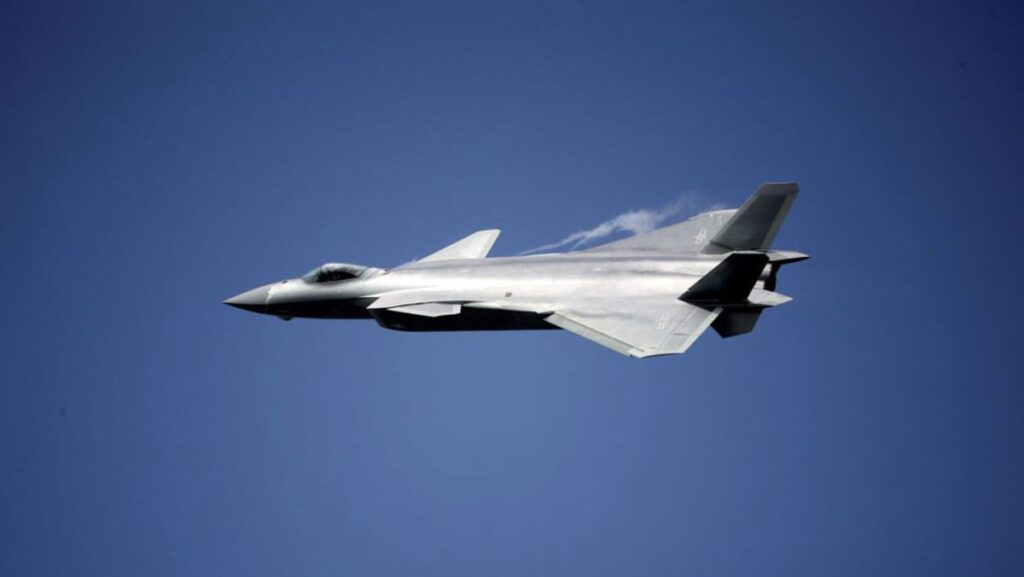
The name was new. The pattern was not.
On December 29, 2025, the People’s Liberation Army’s Eastern Theater Command announced the commencement of “Justice Mission 2025” — a two-day military exercise involving army, navy, air force, and rocket force units operating in the Taiwan Strait and five zones surrounding the island. It was the eighth major military drill around Taiwan since the Fourth Taiwan Strait Crisis began in August 2022, and the second major exercise of the year following the Strait Thunder-2025A drills in April. (Source: Wikipedia / Justice Mission 2025)
I am going to lay out what happened factually, explain what was new about this exercise compared to previous ones, and avoid the two common traps in coverage of cross-strait military activity: either dismissing it as routine saber-rattling or treating it as the immediate prelude to invasion. The reality is more nuanced and, in some ways, more concerning than either framing suggests.
What Actually Happened Over Two Days
On Day One, December 29, the PLA deployed 14 warships, 14 China Coast Guard vessels, and 89 warplanes in the skies around Taiwan, with 67 aircraft entering Taiwan’s response zone. Taiwan’s defense ministry reported the detection of an “amphibious assault strike group” consisting of four ships in waters southeast of Taiwan. The exercise areas were formally designated in five zones around the island. (Source: CNN, December 2025)
Day Two escalated. The PLA conducted live-fire drills and launched rockets from positions in Pingtan and Shishi in Fujian Province — 17 rockets into the zone north of Taiwan near the port of Keelung, and 10 rockets into the zone southwest of Taiwan near the port of Kaohsiung. This was the first time China had fired rockets into the Taiwan Strait since the 2022 exercises. The exercise zones were later expanded from five to seven. (Source: AEI, December 2025)
The most significant tactical development: all 10 rockets fired into the southwestern zone landed within Taiwan’s contiguous waters — the band between 12 and 24 nautical miles from Taiwan’s coast. This represented the closest that PLA weapons had landed to Taiwan during any exercise in the current crisis cycle. Previous exercises had stayed outside this buffer zone. (Source: AEI, December 2025)
What Made This Different
Three things distinguished Justice Mission 2025 from previous exercises.
First, the proximity. By firing into Taiwan’s contiguous zone, China crossed a boundary that had been respected since the 2022 exercises. Taiwan’s contiguous zone is the last buffer before sovereign territorial waters (12 nautical miles). The American Enterprise Institute’s analysis noted that it is unclear how future exercises can further escalate now that this line has been breached, since the next step would be firing into territorial waters — an act much closer to a direct military confrontation.
Second, the stated objective. For the first time, a PLA exercise around Taiwan explicitly included deterring “external interference forces” as a stated aim — a clear reference to the United States and Japan. Previous exercises focused primarily on messaging directed at Taiwanese pro-independence groups. The expansion of stated objectives to include third-party deterrence reflects a shift in how China frames these operations. (Source: ORF Online, January 2026)
Third, the deployment of amphibious capabilities. The PLA Navy deployed a Type 075 landing helicopter dock and a Type 071 landing platform dock to waters east of Taiwan. These are ships designed for amphibious assault and troop projection. Their presence east of Taiwan — the side furthest from mainland China — suggests the PLA was rehearsing the ability to project force around the entire island, not just across the strait.
The Trigger
The immediate trigger was the December announcement of a U.S. arms package to Taiwan valued at over $11 billion — a record. Japan’s Prime Minister Sanae Takaichi had also stated that Japan’s military could become involved if China moved against Taiwan. China’s foreign ministry spokesperson explicitly linked the exercise to these events, calling it a “severe punishment for separatist forces seeking independence through military buildup.” (Source: Global Taiwan Institute, January 2026)
But planning for the exercise likely predated the immediate trigger. Earlier analysis of the unprecedented December 8-12 maritime deployment — which involved over 90 ships across the East China Sea and Taiwan Strait, the single largest Chinese naval deployment to date — suggested that the operation took approximately 70 days to plan, meaning it was scheduled before the arms sale announcement.
The Impact on Civilians
Taiwan’s Civil Aviation Administration reported that more than 100,000 travelers were affected, with 857 international flights impacted and 84 domestic flights canceled. Routes to the outlying islands of Kinmen and Matsu were blocked, affecting approximately 6,000 travelers. The economic disruption to civilian aviation and shipping — not just the military posturing — is a dimension that often gets lost in geopolitical analysis but matters enormously for the people who live in the region.
What This Means
The pattern of escalation since 2022 is consistent and deliberate. Joint Sword, Strait Thunder, and now Justice Mission represent a progression in scale, proximity, and stated objectives. Each exercise introduces a new element that normalizes a higher baseline of military pressure.
Taiwan condemned the drills. The EU said the exercises increased tensions and endangered international peace. Australia opposed the actions. Japan conveyed concerns to China. The U.S. Pentagon declined to comment.
The question is not whether China will conduct another exercise — it will. The question is what the next escalatory step looks like when the previous buffer zones have already been crossed.
—