In early January 2026, Singapore’s President Tharman Shanmugaratnam officially opened Greenphyto, a five-storey, fully automated hydroponic facility in the Jurong West industrial area. At over 23 meters tall, it is currently billed as the world’s tallest indoor vertical farm. The $80 million facility (about US$62 million) can produce up to 2,000 tonnes of leafy greens per year at full capacity using AI-controlled growing systems, robotics, and 69 patented technologies.
That is the headline version.
The more interesting story — and the one that most outlets are not covering — is that Greenphyto opened in the middle of a wave of vertical farming failures, both in Singapore and globally. The same week this facility was being celebrated, at least three other Singapore-based vertical farming companies had already shut down or abandoned expansion plans. So the question is not just “can you grow lettuce in a skyscraper” — it is whether anyone can do it without going bankrupt.
I find this story worth examining because it sits at the intersection of food security, technology hype, and the kind of hard economic reality that separates working businesses from expensive science projects.
What Greenphyto Actually Built
The facility occupies about 2 hectares of land in an industrial zone — not a gleaming tower in the financial district, as some futuristic concepts propose. Inside, towering vertical racks are stacked with hundreds of trays of greens, each grown under LED lighting that adjusts automatically to the crop’s growth stage. The system is fully hydroponic — no soil involved. Nutrient-rich water circulates through the racks, and AI systems manage growing conditions from seeding through harvest.
The only part of the process that still requires human labor is packaging. Everything else — planting, monitoring, adjusting nutrients, even detecting plant disease — is automated.
Current production stands at about 200 tonnes annually, which is 10% of the facility’s full 2,000-tonne capacity. The produce, sold under the Hydrogreens brand, is already available in 95 supermarkets across Singapore, including FairPrice and Sheng Siong. A 200-gram pack of kailan costs S$3.95. A 100-gram pack of lettuce goes for S$3.20. (Source: The Straits Times via Asia News Network, January 2026)
Greenphyto’s founder, Susan Chong, spent 14 years developing the facility. Her approach differs from many failed competitors in one critical way: the farm operates on a make-to-order basis. Rather than growing produce speculatively and hoping supermarkets buy it, Greenphyto only grows what has already been ordered. This controls waste and helps manage the enormous energy costs that have sunk other operations. (Source: VnExpress International, January 2026)
The Failures Nobody Mentions
Greenphyto’s opening is impressive. But it happened against a backdrop that should concern anyone investing in this sector.
In October 2025, Growy Singapore entered voluntary liquidation less than a year after its official opening. The 8,000-square-meter facility simply could not make the economics work — energy costs and operational inefficiencies ate through its capital. Separately, VertiVegies abandoned plans to build an indoor vertical farm in Lim Chu Kang around 2022. And I.F.F.I., which operated a massive 38,000-square-meter facility in Tuas, shut down entirely. (Source: Mothership.sg, January 2026)
These are not isolated incidents. Globally, the vertical farming industry has been hit by a wave of closures, driven by rising energy costs (LED lighting and climate control consume enormous amounts of electricity), supply chain disruptions following COVID-19, and weakening investor confidence after the initial hype cycle.
In late 2025, Singapore also dropped its ambitious “30 by 30” goal — the target of producing 30% of the nation’s nutritional needs locally by 2030. The government replaced it with more modest targets focused on protein and fiber production by 2035. That policy shift tells you something about how the government itself assesses the near-term viability of high-tech local food production.
Why Singapore Specifically
To understand why vertical farming keeps getting tested in Singapore despite these failures, you need to understand the country’s unique constraints.
Singapore imports over 90% of its food. The entire country is smaller than New York City, with roughly 1% of its land dedicated to agriculture. It has no meaningful arable farmland, no fresh water reserves to speak of, and a population of nearly 6 million people who need to eat every day.
For a nation this dependent on external food supply chains, any disruption — whether from climate events, geopolitical tensions, or trade disputes — represents an existential risk. Singapore’s government has spent decades trying to reduce this vulnerability, and vertical farming is one of the technologies it has bet on most heavily.
The logic is straightforward: if you cannot expand your farmland horizontally, build upward. Use technology to control every variable — light, temperature, nutrients, humidity — and produce food independent of weather and seasons. In theory, a single vertical farm in an industrial zone can replace hectares of traditional farmland.
The challenge is that theory and economics do not always align.
The Energy Problem That Will Not Go Away
The core issue with vertical farming is energy cost. Traditional agriculture gets its energy from the sun for free. Vertical farms have to pay for every photon.
LED lighting systems, climate control, water pumping, and AI monitoring all consume electricity — lots of it. In a country like Singapore, where electricity prices are already among the highest in Southeast Asia, this creates a fundamental cost problem. Vertical farm produce has to compete on price with imported vegetables from Malaysia, Australia, and China, where labor and energy costs are dramatically lower.
Greenphyto’s approach — 69 patents focused specifically on optimizing energy efficiency and cost management, combined with make-to-order production — suggests that the company’s leadership understands this problem in a way that previous failed ventures did not. But even Greenphyto is currently operating at only 10% of its stated capacity. Scaling up to full 2,000-tonne production while maintaining competitive pricing will be the real test.
A study published in PNAS Nexus by researchers including Dr. Vanesa Calvo-Baltanás examined how six food groups performed in a simulated 10-layer vertical farming system. The results showed that mushrooms and insects grown in vertical environments could theoretically produce up to 6,000 times more protein per acre than traditional farming. But the study also highlighted that energy input remains the primary bottleneck preventing these theoretical yields from translating into affordable food at scale. (Source: Vertical Farm Daily, May 2025)
What This Means Going Forward
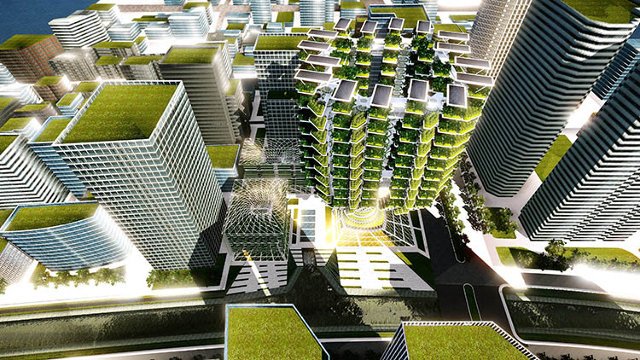
Greenphyto is not the futuristic 80-storey farmscraper that concept artists keep rendering. It is a five-storey industrial building in Jurong West. The produce it grows is not exotic or revolutionary — it is kailan, lettuce, spinach, and arugula. There are no Michelin-star chefs on staff. The facility does not claim to solve global food security.
What it does represent is something potentially more important: a data point. If Greenphyto can scale to full capacity, maintain competitive pricing against imports, and operate profitably over a sustained period, it provides a proof of concept that other land-constrained nations — the UAE, South Korea, Japan, urban zones across Southeast Asia — can study and potentially replicate.
If it cannot, it becomes another cautionary tale in a growing list.
The honest assessment is this: vertical farming technology works. The engineering challenges of growing food indoors at scale have been largely solved. What has not been solved is the business model. Making it work financially, consistently, year after year, at a price that competes with conventional agriculture — that remains the hard part.
I will be watching Greenphyto’s production numbers closely over the next 12 months. The technology is not the question anymore. The spreadsheet is.