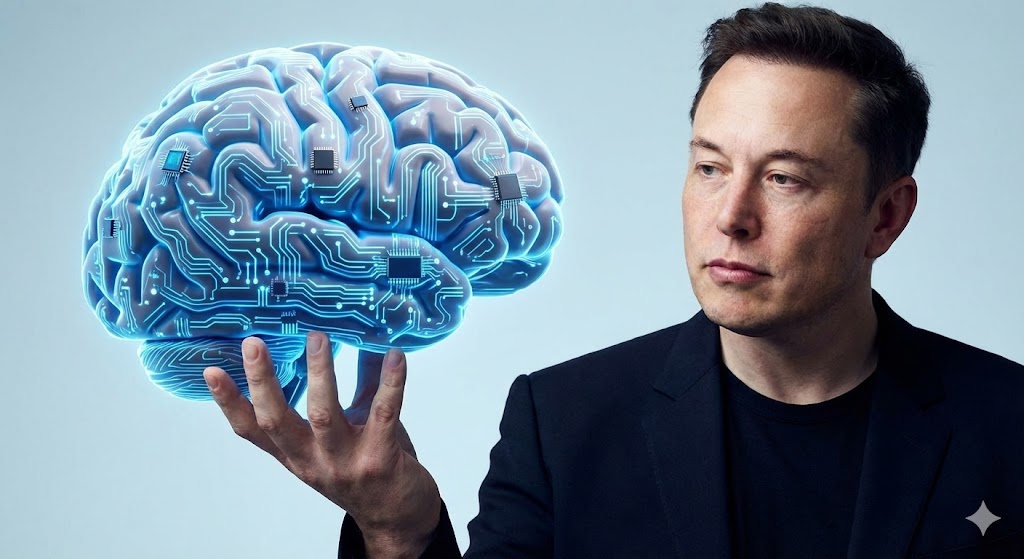
Noland Arbaugh was implanted with Neuralink’s N1 chip in January 2024. Since then, he has played chess, browsed the web, designed digital images with CAD software, and sent messages — all using only his brain signals, without moving his hands. He is paralyzed from the shoulders down. The chip gave him back access to his digital life.
By late 2025, Neuralink had expanded its PRIME study to 21 participants globally, up from 12 just months earlier. The company launched a second study called CONVOY to test robotic arm control. It received FDA Breakthrough Device Designation for speech restoration in May 2025. Trials are expanding to the UK, Canada, Germany, and the UAE. A $650 million Series E round in June 2025 funded what the company says will be high-volume production and automated surgery targeting 2026.
The media framing of this story tends toward two extremes: either Neuralink will make the smartphone obsolete by 2030, or it is all hype from Elon Musk. Neither framing is useful. The technology is real, the medical results are genuinely impressive, and the timeline for consumer applications is genuinely distant. Understanding the actual state of play requires examining what works, what does not, and what stands between a medical device and a mass-market platform.
—
What the Implant Actually Does Today
The N1 chip contains 1,024 electrodes distributed across 64 threads, each thinner than a human hair. A surgical robot called R1 places these threads into the motor cortex with micron-level precision. The implant is fully internal — no wires protrude from the skull — and communicates wirelessly with external devices.
In the PRIME study participants, the chip reads neural signals associated with intended movement. When Arbaugh thinks about moving a cursor left, the corresponding motor cortex neurons fire, the chip detects the pattern, and software translates it into cursor movement on a screen. The same principle extends to typing, gaming, and device navigation.
A second participant named Brad, who has ALS, used the device to narrate and edit a YouTube video entirely through brain signals. A third participant, a paralyzed military veteran implanted at the University of Miami in June 2025, described the experience in direct terms: the device gave him his purpose back.
The results are medically significant. People who could not interact with digital devices independently can now do so through thought alone. But the current system operates within narrow parameters: it reads motor intention signals, translates them into cursor or device control, and works within a controlled software environment. It does not read thoughts, decode language, or provide sensory feedback.
—
The Bandwidth Argument — And Its Limits
The most common argument for brain chips replacing smartphones is the input/output (I/O) bottleneck. The human brain processes enormous amounts of information, but our interface with digital devices is limited to thumb movements on glass at roughly 40 words per minute. A direct neural interface could theoretically bypass that bottleneck entirely.
This is conceptually valid. Neuralink’s current chip achieves a data transfer rate that already enables faster-than-typing cursor control for paralyzed users. The company’s research suggests future iterations could enable handwriting recognition, simultaneous multi-cursor control, and potentially direct speech synthesis from neural signals.
But there is a fundamental difference between medical bandwidth gains and consumer-grade performance. Controlling a computer cursor through neural signals is a breakthrough for someone who cannot use their hands. For someone who can type 80 words per minute on a physical keyboard and scroll through apps with muscle memory built over a decade, the neural interface needs to be not just functional but dramatically superior — and it needs to work reliably in uncontrolled environments, not just in clinical settings with dedicated support teams.
That performance gap is not a matter of iteration. It requires solving problems in signal stability (threads can retract from brain tissue, as occurred with Arbaugh’s implant before software fixes), long-term biocompatibility (how the brain responds to an implant over years and decades), and scalability of the surgical procedure (currently performed by specialized neurosurgeons, not in Apple Stores).
—
What Apple Is Actually Doing
The competitive framing of “Neuralink vs. iPhone” misses a significant development: Apple is not ignoring brain-computer interfaces. Apple is developing technology to allow users to control iPhones, iPads, and Vision Pro headsets using brain signals, in collaboration with Synchron — a BCI company that uses a less invasive approach, threading electrodes through blood vessels rather than directly into brain tissue.
This matters because it suggests the eventual competitive dynamic may not be “brain chip vs. phone” but rather “who controls the brain-computer platform.” If Apple integrates BCI input into its existing ecosystem, the iPhone does not die — it evolves. The phone becomes one node in a multi-interface system that includes voice, touch, gesture (via Apple Watch and Vision Pro), and eventually neural input.
Neuralink’s vision is more radical: a fully implantable system that could eventually make external devices unnecessary. Musk has described a future where the implant itself serves as the computing platform, with AR/VR rendered directly to the visual cortex. But this vision requires breakthroughs in brain stimulation (writing information into the brain, not just reading it) that are significantly further from realization than the reading capabilities already demonstrated.
—
The Security and Privacy Problem
A device that reads neural signals and transmits them wirelessly presents security and privacy challenges that have no precedent in consumer electronics.
If your phone is hacked, someone can read your messages. If a brain-computer interface is compromised, someone could theoretically access the raw neural signals that encode your motor intentions, your emotional states, and potentially your cognitive processes. The attack surface is not a glass screen — it is the nervous system itself.
Researchers have flagged this concern repeatedly. The current Neuralink system communicates via Bluetooth-class wireless protocols to nearby devices. Any wireless communication channel is theoretically vulnerable to interception or manipulation. At the medical device stage, with 21 participants in controlled clinical settings, this risk is manageable. At the consumer stage, with millions of users in uncontrolled environments, it represents a security challenge unlike anything the technology industry has faced.
There is also the data question. Who owns neural data? What happens when a company with access to your brain signals is acquired, goes bankrupt, or receives a government subpoena? These are not hypothetical concerns — they are the regulatory and ethical framework that must be established before any BCI transitions from medical device to consumer product.
—
A Realistic Timeline
Neuralink envisions generating $1 billion in annual revenue by 2031, performing 20,000 implants per year across five clinics, and offering three products: Telepathy (device control for paralyzed patients), Blindsight (vision restoration), and Deep (treatment for tremors and Parkinson’s). This is an aggressive but plausible medical device roadmap.
Consumer applications — where a brain chip competes with or replaces the smartphone for healthy individuals — require a different set of milestones: regulatory approval for elective implantation in healthy people (which no jurisdiction currently allows), demonstration of long-term safety over decades (requiring years of data that do not yet exist), cost reduction to mass-market levels (current implants involve neurosurgery that costs hundreds of thousands of dollars), and social acceptance of elective brain surgery for convenience.
The honest assessment is that brain-computer interfaces will transform medical care for neurological conditions within this decade. Neuralink’s results already demonstrate that. The transition to a consumer platform that competes with the smartphone is a fundamentally different proposition that depends on breakthroughs in safety, cost, regulation, and public acceptance that are measured in decades, not product cycles.
The iPhone is not dying. But the interface between the human brain and digital systems is expanding — and the companies building that interface, whether Neuralink, Synchron, or Apple, are laying groundwork for a shift that will eventually matter as much as the smartphone itself did.
—
Sources:
1. ROIC News — Neuralink Expands BCI Trial to 21 Participants Worldwide (January 2026) 2. All Health Tech — Neuralink’s Latest Updates: Brain Implants, Human Trials & What’s Ahead (July 2025) 3. eWeek — Neuralink Brain Chip to Be Tested on Brits (August 2025) 4. University of Miami / InventUM — Paralyzed Veteran Implanted with Neuralink Device (June 2025) 5. MedPath — Neuralink Implants Third Human, Plans Expansion (January 2025) 6. TechGenYZ — Neuralink Brain Chip Trial 2025: Results and Ethical Concerns (June 2025) 7. ClinicalTrials.gov — PRIME Study NCT06429735
Disclaimer: This article reports on medical device technology and does not constitute medical, investment, or technology purchasing advice. Brain-computer interfaces are investigational devices not yet approved for general consumer use.